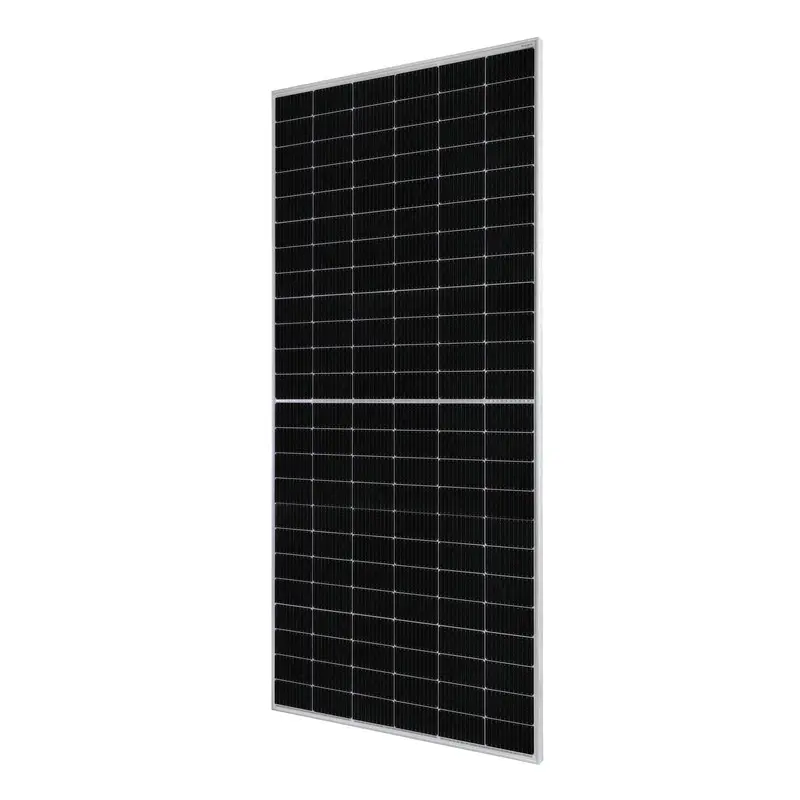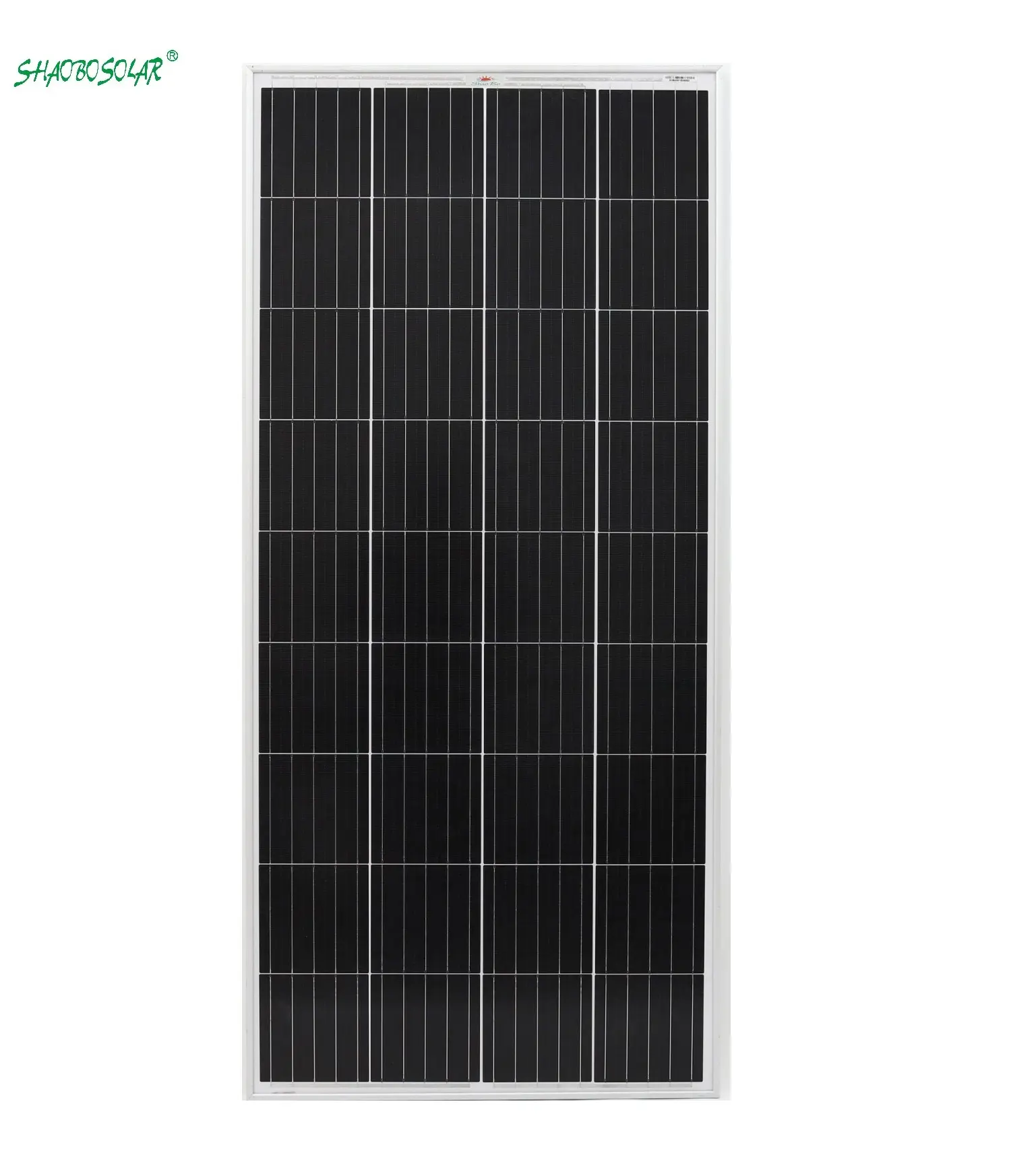









60 Cells 5bb 9bb 300w 320w Mono Solar Pv Module configurations have fundamentally reshaped expectations across both residential and commercial solar markets, yet many installers and project developers still overlook the engineering nuances that separate average panels from truly optimized ones. The difference increasingly comes down to what happens between the cells — not just the cells themselves.
For years, the solar industry conversation revolved almost exclusively around cell efficiency percentages. Manufacturers raced to announce incrementally higher conversion rates, and buyers fixated on those numbers as the ultimate proxy for quality. But a quiet architectural revolution has been unfolding inside the module itself — one that rewrites how energy is harvested, retained, and delivered under real-world conditions.
The Busbar Evolution Nobody Talks About
When 5-busbar (5BB) technology first appeared, many dismissed it as a marginal upgrade. The logic seemed simple: more wires meant less shading on the cell surface and shorter current travel paths, but surely the gains would taper off quickly. The shift to 9-busbar (9BB) designs proved those assumptions wrong. By distributing current across nine contact points instead of five, manufacturers achieved measurable reductions in series resistance and a meaningful boost in fill factor — the often-ignored metric that determines how close a panel gets to its theoretical maximum power output.
What makes 9BB particularly interesting is its impact on microcracking resilience. In a standard 5BB design, a hairline fracture crossing two busbars can knock out a significant portion of the cell's contribution. With 9BB, the same crack typically affects a much smaller segment, preserving more of the panel's output over time. For asset owners calculating 25-year yield projections, this mechanical redundancy translates directly into reduced degradation risk.
Mono PERC and the Half-Cell Advantage
Monocrystalline PERC (Passivated Emitter and Rear Cell) technology has become the de facto standard for mainstream modules, but the real performance differentiator now lies in how those cells are sliced and arranged. Half-cell configurations reduce internal current by 50% compared to full-cell designs, slashing resistive losses and allowing panels to maintain higher output in partial shading scenarios. When a standard full-cell panel loses one cell string to shade, the entire module can drop to near-zero output. A half-cell panel with a split junction box keeps the unshaded half running at full capacity.
This matters enormously in residential installations where chimneys, dormers, and neighbouring vegetation create unpredictable shading patterns throughout the day. Commercial rooftop arrays benefit similarly from the improved low-light behaviour inherent to mono PERC architecture, particularly during overcast mornings and late afternoons when diffuse irradiance dominates.
Where Supply Chain Geography Meets Quality Assurance
Behind every spec sheet and performance warranty lies a manufacturing ecosystem that most buyers never see. The crystalline silicon supply chain spans polysilicon purification, ingot pulling, wafer slicing, cell processing, and module assembly — each step introducing potential variance in the final product. Facilities that consolidate multiple stages under one quality management system tend to produce modules with tighter power tolerance bands and fewer field failures.
Established production hubs in northern China, for instance, have leveraged proximity to both raw material sources and major transportation corridors to streamline logistics while maintaining rigorous in-line inspection protocols. A facility operating five dedicated module lines with automated electroluminescence testing at every stage can catch microcracks and soldering defects before they ever leave the factory floor. For international buyers sourcing High Efficiency Monocrystalline Solar Panels 150W190W from China Factory Suppliers, this level of vertical integration provides a hedge against the batch-to-batch variability that plagues fragmented production networks.
Temperature Coefficients and the Forgotten Metric
Efficiency ratings on datasheets are measured under Standard Test Conditions — 25°C cell temperature, 1000 W/m² irradiance, and a specific air mass. Real rooftops rarely see those conditions. On a summer afternoon in southern Europe or the American Southwest, cell temperatures routinely climb past 60°C, and that is where temperature coefficients start separating serious modules from the rest.
Mono PERC panels with optimized rear-side passivation layers exhibit temperature coefficients around -0.35% to -0.37% per degree Celsius, compared to -0.40% or worse for older polycrystalline designs. Over a 30-degree temperature rise, that difference compounds to roughly 1.5% more power retention — not trivial when multiplied across a 10-megawatt installation over two decades of operation.
Degradation Rates and the Long Game
The industry has largely settled on two degradation benchmarks: an initial-year loss of up to 2% as Light-Induced Degradation (LID) stabilizes, followed by annual degradation of 0.5% to 0.7% for the remaining warranty period. Premium mono PERC modules are now pushing annual degradation below 0.55%, with some manufacturers backing 30-year linear performance warranties that guarantee at least 87% of rated output in year 30.
Achieving those numbers demands precision at every manufacturing step — from the uniformity of the silicon wafer doping to the consistency of the anti-reflective coating. It is the kind of quality discipline that distinguishes module suppliers who view their products as 30-year infrastructure assets from those chasing short-term cost reductions.
Smarter Procurement in a Maturing Market
As the global solar market matures beyond feed-in tariff incentives toward merchant power economics, the calculus for module selection has grown more sophisticated. Levelized Cost of Energy (LCOE) models now weigh degradation rates, temperature behaviour, and shading tolerance alongside upfront price per watt. A module that costs three cents more per watt but degrades 0.15% slower annually may deliver a lower LCOE over a 25-year PPA period.
This shift benefits buyers who invest time in understanding module architecture rather than defaulting to brand recognition or headline efficiency figures. The 60-cell mono PERC form factor, particularly in 9BB half-cell configurations, represents a convergence point where manufacturing maturity, field reliability, and economic performance intersect in ways that serve both residential and light commercial applications equally well. For an industry that once raced solely on laboratory efficiency records, that quiet convergence may be the most meaningful development yet.